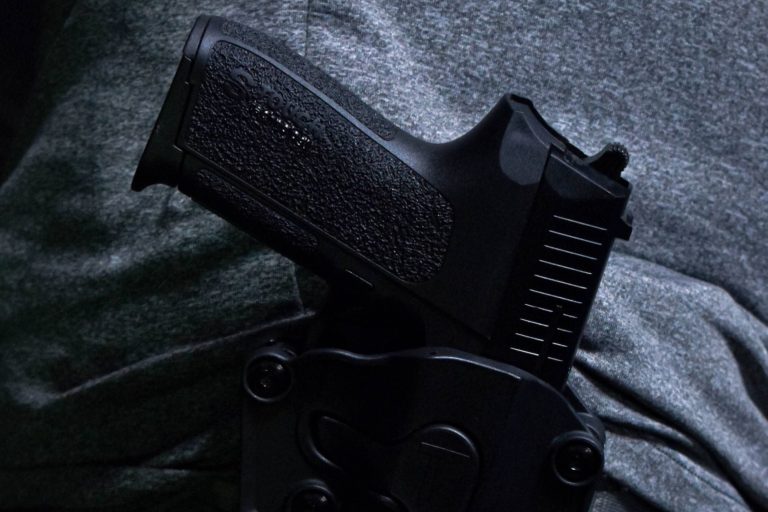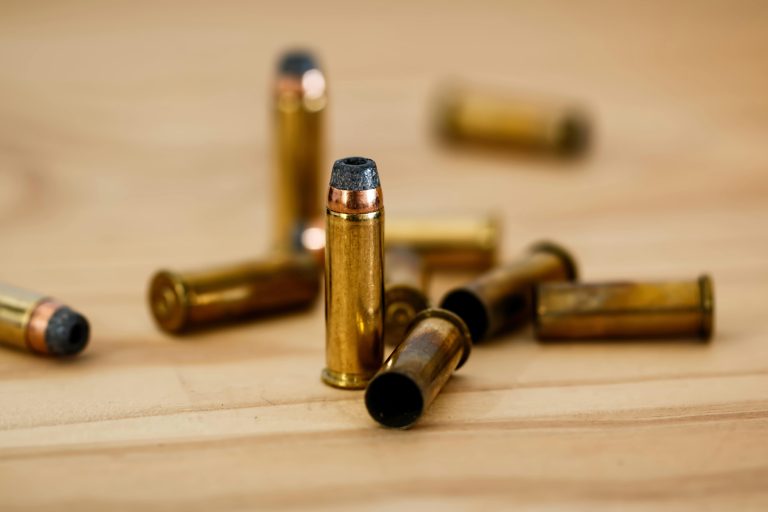
I didn’t get fired after my first article so I guess you’re stuck with me on this next one. If you have read my last article on defensive pistol selection, you may already have an idea as to what caliber I lean towards…or, do you? However, I believe that this is another Unicorn that does not exist.
Many people agonize long, sleepless nights, over the “perfect” caliber for their primary defensive pistol. I know that I have. Will the ammunition be reliable, or will some exotic hollow point design cause feeding malfunctions? Will the caliber I select have enough penetration, or too much? Will the caliber incapacitate the suspect, while not being hard manage under recoil and muzzle blast? Will I have enough ammunition to finish what I start, if there’s multiple attackers or the first few shots don’t hit the mark? Can I afford and find the ammunition I select in most gun stores? All these serious questions come to mind when making a selection for your ideal defensive caliber selection.
The 1986 FBI Miami Shootout
In 1986, the Federal Bureau of Investigation (FBI) attempted to take down two violent criminals in Miami, Florida. Unfortunately, things went very bad leaving two FBI agents dead and five wounded, of the eight agents that started the gunfight. While many things could have been done differently, many people viewed poor ammunition performance of 9mm and 38 Special cartridges as the primary cause of the agents deaths. Thankfully, this incident brought about more scientific testing of defensive ammunition and increased consumer demand for jacketed hollow point performance from the manufacturers. This incident also brought upon the switch from revolvers to semi-automatics in the U.S. police force.
My Experience With Defensive Calibers
For the record, I need to give you full disclosure. Over the past 30+ years, I have carried the following calibers on duty: 38 Special, 357 Magnum, 9x19mm (9mm), 40 S&W and 45 ACP. While any of these calibers will work, I have bet my life on the 45ACP cartridge for more than half of that time though I carry the 9mm cartridge now. I have carried the 40 S&W and 38 Special cartridges the least. Are there other calibers that will work? Sure, but you’ll quickly figure out why these listed are the top picks.
Learn more about firearm options here: https://cpsagreenville.com/firearms/
Choosing Your Defensive Handgun Caliber
When selecting your best defensive handgun caliber, we first need to make sure that we don’t get caught up in a pistol/revolver selection issue rather than the appropriate cartridge selection for our needs. Many people are so set in the type of gun they are going to carry, they don’t realize that limits the “perfect” cartridge for them in many instances. For example, most defensive revolvers are offered generally in rimmed cartridges such as 38 Special or 357 Magnum. There are a few revolvers chambered in 40 S&W and 45 ACP, but they are bigger, heavier, more costly, require things called “moon clips” to properly function and are less available than the 38/357 versions. Selecting the 1911 pistol generally means 45ACP caliber, for optimum performance. Likewise smaller guns generally are found in smaller calibers, for several reasons like proper function and controllability.
Factors in Selecting a Defensive Caliber
Here’s a few other issues I consider when picking my “perfect” defensive pistol cartridge:
1. Reliability
If the handgun/ammunition combination will not fire 500 rounds without malfunction, for you, its performance is suspect for working when you need it to work the most. This especially includes your choice of jacketed hollow point bullet for self-defense use.
2. Penetration
Generally, 12-18″ of penetration in ballistic gelatin is needed to reach vital organs of suspects, even at oblique angles and through barriers like clothing and glass. Again, this is with jacketed hollow point ammunition.
3. Shootability
Technical term I use to describe the amount of felt recoil (ability to hold on target; controllability under recoil), muzzle flash/blast, etc., given by the cartridge chosen.
4. Reasonable Accuracy
Generally around 4″ groups, from a rest, at 25 yards.
5. High Capacity
Preferably magazines holding more than ten cartridges. The fastest reload is always the one we don’t have to make.
6. Easy to Find
Ammunition (for practice and carry) is in regular production and is available in most full-service gun shops, nationwide.
7. Cost
Is the chosen cartridge available at a reasonable price, since we should be practicing at least 100 rounds per month.
Training matters just as much as equipment: https://cpsagreenville.com/training-classes/
Reliability, Penetration, and Shootability
Reliability is always the first consideration. If the handgun will not properly function, it will not solve your problem. This is for practice and carry ammunition. Avoid unusual hollow point designs that have a tendency to causing feeding malfunctions in your pistol. Nothing creates a lack of confidence and increases bad habits like a handgun that will not function!
Penetration is second. Any bullet that doesn’t reach the vitals of your attacker, through any barriers presented, probably will not stop them from harming you. You never know if you will have to shoot through a wall, windshield, car door, heavy clothing, etc., to be effective.
As far as I’m concerned, “Shootability” is third, yet still very important. Some cartridges have more felt recoil (increasing shot to shot recovery time back on target), muzzle flash (this causes issues with low light vision) and have a harder to control recoil impulse than others. In plain English, 40 S&W and 357 Magnum cartridges are generally harder to shoot well due to heavier felt recoil, recoil impulse and muzzle flash/blast, than say compared to a 9mm or 38 Special.
My Preferred Defensive Calibers
Personally, my two favorite self defense calibers are the 9mm and 45 ACP.
What would make me choose a 45 ACP over a 9mm, or vice versa? Obviously, someone that lives in the northern states would have heavier clothing considerations for more needed penetration. Those people living in the western part of the United States which have animals such as Grizzly bears and Moose to worry about too.
In the southern part of the United States, it’s extremely hot during the summer months so the clothing most people wear is less and thinner…needing less penetration. You get the idea. With all things equal, bigger and heavier bullets are more effective at stopping heavier animals since they let more blood out and take air in due to the larger permanent wound cavity.
Bullet Performance Considerations
The main issue that would cause me to choose one over another caliber, is what type of bullet or projectile are we talking about?
If we are comparing modern day, bonded core, jacketed hollow-point bullets from Speer, Remington, Winchester? If so, all of the listed calibers perform about the same in penetration and expansion wise. Or, are we limited to full metal jacket ammunition only like in the military, state of New Jersey, etc.? In this case, I would choose the 45 ACP.
Handgun Self-Defense Ammunition Ballistics Test
Water Jug Testing
Since we rarely believe anything we read around here, I’ve been using another cheaper and easier method to test bullet performance at home.
Empty, gallon sized, milk jugs work well in determining pistol penetration and performance. We take five jugs, place them in a row, approximately 1 1/2″ spaced between them (Note that the average jug is 5 3/4″ in width), then fire our test ammo to determine performance and expansion.
Since 1997, using modern day, bonded core, jacketed hollow point bullets, I find that the listed defensive calibers stop in the third, or fourth water jug. This is regardless of the listed calibers 9mm, 38 Special, 357 Magnum, 40 S&W, or 45ACP, as long as we’re using jacketed hollow point ammunition. Most full metal jacket bullets go clear through all five jugs! Prepare to get wet if you try this experiment at home.
Law Enforcement Trends
With the current ammunition performance enhancements (like in the Speer Gold Dot, Remington Golden Saber and Winchester SXT/PDX product lines), many law enforcement agencies like the FBI have gone back to using the 9mm cartridge.
Many local law enforcement agencies in my area (eastern North Carolina) are going back to it because of the less felt recoil of the lighter cartridge, smaller and lighter pistols more officers can get their hands around, higher magazine capacity, less muzzle flash and less ammunition cost.
Recommended Defensive Loads
- 38 Special, 125-158 gr JHP +P
- 357 Magnum, 125-158 gr JHP…depends on barrel length, as does the 38 Special
- 9mm, 115-124 gr JHP +P…I prefer 124 gr weight
- 40 S&W, 165-180 gr JHP…I prefer 180 gr weight
- 45 ACP, 200-230 gr JHP…I prefer 230 gr weight
Final Thoughts
No cartridge is perfect. They all have different strengths and weaknesses just like us. Our size, ability, experience, skill level, environment and possible needs, all effects what our best choice should be.
Everything will be a trade off. If you get more ammunition, it will have to be smaller in caliber. If you get more performance, you’ll have to deal with more recoil and muzzle flash/blast. Remember this is part of an overall system.
https://cpsagreenville.com/safety/
Case in point, the US Air Marshals issued 357 Sig caliber pistols because they want a lot of penetration in a semi automatic handgun, due to the lightweight, small diameter bullet, moving at high speed. The reason why they choose that cartridge over others, is they know they may have to shoot through the seats of an airplane to stop terrorists. This is the same reason why North Carolina Highway Patrol also used 357 Sig, since they are concerned with being able to shoot through windshield glass, car doors, etc., while still having enough penetration to stop a suspect. Obviously, they usually work around vehicles due to the nature of their job.
As far as I’m concerned, I’ll stick with the current 9mm 124 gr, +P (high velocity) load from Speer (Gold Dot) or Winchester (SXT/PDX). Muzzle velocity was 1,233 fps and 1,278 fps, from my Glock 17, when I chronographed it, respectively. That’s within 100 fps of the 357 Sig and 357 Magnum loads using the same bullet weight in 4″ barreled guns. Yet the 9mm +P, 124 grain JHP, has less felt recoil, less muzzle flash/blast, has a lighter gun weight than the heavier calibers, holds more ammunition and is cheaper to shoot that the other calibers. 9mm (9x19mm) ammunition is available worldwide, while some of the other calibers are not.
A lot has changed since the 1986 Miami FBI shoot-out that started the transition of the police from revolvers to automatics, as well as the development of high performance duty/carry ammunition. The quality of the pistols, ammunition development and our knowledge of ballistics have increased dramatically. Take advantage of this and invest in some quality defensive hollow point ammunition. The life you save may be your own.
Until next month…see you on the range!
Jim