
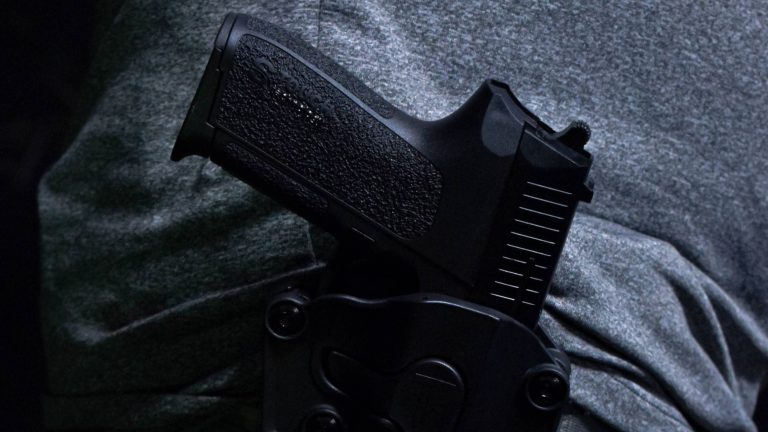
The Quest for the “Perfect” Concealed Carry Holster
So we’ve bought our new handgun, figured out what back-up or “small” gun we’re going to carry to compliment the “big” gun, researched the right caliber of ammunition, but we have one more issue to address. How do we actually carry it all concealed, yet still have a relatively quick access to the handgun? We have worked really hard to see what the best overall weapon “system” is for our own concealed carry 24/7, 365 days per year, yet we are now tasked with picking the “perfect” holster. Obviously, neither your selection or this article is going to be easy, since we all have different issues to consider.
Real-World Training Realities: A Car Is Not a Holster
I was recently conducting some entry-level defensive pistol training for several highly educated and well-read students, when I became surprised yet again. All of the students had made excellent choices in calibers and defensive pistols. It was obvious from conversation that all had spent a considerable amount of time researching what pistol and caliber was going to be the best for them. One shooter had spent almost $1,300.00 on his defensive pistol, yet had purchased no holster in which to carry it. When asked about a holster, the student stated that he generally carried his pistol in his car. Well my friends, a car is not a holster.
As far as the other two of the students, they had purchased excellent defensive pistols but their holsters were at best $25.00 “specials”, not suitable for the long-term daily use. None of the students had a magazine carrier or suitable belt designed to support the weight of a handgun. It occurred to me that none of them had spent much time in considering what the “best” defensive handgun holster for concealed carry would be.
Key Questions to Consider Before Buying
When picking the “perfect” holster for our use, several questions arise. Is your defensive handgun going to be carried openly, concealed, or both on occasion? Should our holster have any retention to keep the pistol from being grabbed by unauthorized persons, or to keep it from falling out of the holster during running, fighting or jumping over items? If the pistol is going to be carried concealed, should we be concerned with any retention at all? What type of material should the holster be made from for the best long-term use? What angle, or “cant” should the pistol be carried for the best comfort and fastest draw speed? Should the pistol be carried in an outside the waistband (OWB), or inside the waistband (IWB) holster? Are we going to carry our defensive pistol on our waist, ankle, pocket, or in some other manner?
The Case for Concealed Carry Over Open Carry
If the pistol is going to be carried openly, for all to see and grab onto, we need to consider the amount of security/retention we will need to keep others from taking the pistol from us. When I started working in the law enforcement field over 35 years ago, Police Officers used to be routinely killed by suspect/s taking the officer’s own gun. The duty holsters many of us used were well past their prime, leather was worn, they were poorly designed for retention to begin with and many only had one safety strap to keep the handgun (usually a revolver) in the holster while moving in and out of the vehicle. Using several of the current issued duty holsters of that time, I can see why handguns were easily snatched from the front or rear of the holster depending on the brand or model. Given these problems and the sad fact that many officers were not properly trained in weapon retention to begin with, many officer’s names ended up on the memorial wall.
While many of the holsters will allow you to carry the pistol openly, I would personally advocate that you always carry your defensive handgun in a concealed manner. Not to get into tactics or political views, but my thought has always been to retain your tactical advantage of appearing like every other “Sheeple” (Sheep + People). “Blend in”, is the phrase of the day. Wearing your pistol openly invites others, that you may not see or initially believe to be dangerous, into engaging you first when they decide to do others harm. If your weapon is concealed, you can make your choice whether you want to engage or not. You can also pick the best time to win the confrontation, if you appear to be like every other Sheeple. The correctly sized T-shirt, golf shirt, or light jacket, is usually enough to conceal even the largest handgun.
Keep It Simple: The Problem with Retention Straps
As far as retention straps, unusual release mechanisms, etc., I personally do not want any of these “features” on my concealed carry holster. If you do not train with these types of security holsters on a regular basis, each week, you will not be able to quickly draw your pistol without fumbling. When we get big adrenaline dumps, like when we become scared, we loose the ability to use our fine motor skills. Gross motor skills are all we have left. If we have truly kept our handgun concealed until our time of actual need, we should not have to worry about others taking our pistol. The unauthorized person/s will not know that we have one to begin with.
Retention straps and unusual release mechanisms also slow down your draw speed, further increasing your stress during your time of need. Ideally, the handgun should be able to be drawn straight out of the holster, yet remain secure enough so that you can run and/or jump without fear of losing it. I’m not interested in seeing my handgun go tumbling in front of me when I’m running, or jumping. Dynamic situations are just that…Dynamic. Plan accordingly.
Inside the Waistband (IWB) vs. Outside the Waistband (OWB)
Next on the list is whether the holster should be an Inside the Waist Band holster (IWB), or Outside the Waist Band holster (OWB). While many concealed carry users I know prefer IWB holsters, I like the OWB holsters myself. Since I have enough in my pants already…I surely don’t need a pistol in there too. While the pistol is easier to conceal, most users have to buy pants in a larger size to accommodate the handgun during IWB carry. This precludes you from wearing the same pants without having the handgun carried in this method. In addition, many of the IWB designs set the handgun so low (on the belt line) that it stops you from easily getting a master grip before you draw the pistol. Some IWB holsters also keep the handgun so close to the body that it’s hard to obtain a good grip on the pistol without getting caught up in your T-shirt. Thus, slowing down your actual draw speed.
Selecting the Right Cant and Draw Angle
When selecting an OWB holster, I like to have a holster that doesn’t have any cant. This allows for a straight draw when the handgun is worn directly on my hip, or slightly forward. For those concealed carry people that prefer to have their holster slightly behind their hip, you may want to consider a holster with a five degree cant (muzzle more to the rear, grip slightly forward). This allows you to draw the pistol while obtaining a master grip on the handle before the actual draw starts. As you have probably figured out by now, one must obtain a master grip on the pistol before the draw starts.
Holster Materials: Leather vs. Kydex
For over two hundred years, the standard holster material was leather. For the past 25 years, a thermoplastic material called “Kydex” has taken over most holster production. Kydex can be heated and bent into any kind of configuration, yet never looses it’s form when cooled over time. Kydex is resistant to water, has lower friction than leather and scores around “90” on the Rockwell hardness scale making it more scratch resistant. While I own excellent holsters made from both materials, I have come to prefer “Kydex” as my number one choice for a concealed carry holster.
Recommended Kydex Options
While companies such as Blade-Tech, MTK (Man Tracker Knives), Raven Concealment and many others make excellent Kydex concealed carry holsters, I have been most satisfied with a product made locally from MTK. MTK specializes in concealed carry holsters. The owner is a retired police officer, firearms instructor and concealed carry user himself. MTK prices are reasonable and he will custom make whatever combination and/or color you need. Since these are made to order, allow 2-3 weeks for delivery. MTK favorite is the OWB holster. I like the OWB holster because it’s fast to draw, easy to re-holster, it’s made into a curved design to hug your hip for comfort and concealment, yet it still retains the pistol well enough for vigorous, dynamic activity. All MTK holsters come with a tension screw, to set the correct amount of draw tension, to keep it from coming out during vigiorous activity.
For those concealed carry users that prefer the pistol to sit more off of their hips, such as the ladies, I like the Blade-Tech “Classic OWB” Belt holster. This Kydex material OWB holster sits slightly off of the hip when worn with the standard belt loop. This allows for a faster draw, without getting your hand filled with T-shirt. The Tek-Loc belt attachment system would bring the holster closer to the body, for more concealment. Buying two belt attachments would offer the end user more options.
Recommended Leather Options
For those who like the traditional leather as their choice in holster material, another classic OWB holster design is available from Galco. One of my favorite Galco models is called the “Avenger”. This holster was originally designed by the late Col. Charles Askins, of Border Patrol fame. A version of this holster was also made by Bianchi Gun Leather. The Avenger holster sits high on the belt, out of the way and has a minimum footprint on your side. This holster is easier on the inside of your jacket linings due to the leather material its made out of. Because the holster has three pieces of leather sewn together at the opening or top of the holster, it allows the pistol to be easily re-holstered with one hand.
Other solidly designed leather holsters are available from custom makers: Milt Sparks and Ted Blocker. I’m a big fan of the older Milt Sparks’ designed “1AT”/1AT-RT rig for competition, the “55BN” for OWB concealed carry and the “200AW” for OWB revolver carry. For IWB holsters, the Milt Sparks Summer Special 2 is one of the best and oldest designs available. Currently, my all time favorite 1911 holster for OWB concealed and competition use is the Ted Blocker, “Thunder” or the 1AT/RT.
While I’m not a big fan of Inside the Waistband (IWB) holsters, many knowledgeable shooters I know love them. I would look at MTK, Milt Sparks, Cross Breed and Alien Gear IWB holsters. When it comes to IWB carry, you either love them or hate them. You be the judge.
The Dangers of Appendix Carry
Another IWB design that I do not recommend is the appendix style carry. I especially do not care for this method of carry for those of us carrying an extra 25 lbs, or more. Why you may ask? Well, for one I do not find them to be comfortable to wear as stated earlier. Depending on barrel length, some may jab you in the upper thigh or some other non-favorite location when seated. This is less of an issue for those of us in the normal range for Body Mass Index (BMI).
The main reason I don’t care for appendix carry holsters is safety. When carrying an extra 25lbs or more in body weight, the muzzle of the handgun is generally pointed very close to the femoral artery and angled into the pelvic region of the body. If the handgun should discharge while re-holstering, I find the femoral artery to be located in a hard place to stop the bleeding. While I’m no Doctor, I’ve heard most humans don’t last more than two minutes before going into shock after an aterial bleed has started. Remember it’s not only about drawing the pistol, but re-holstering under stress that matters in your holster selection.
Now some IWB concealed carry people will start hollering that the OWB holsters also have the muzzle of the pistol pointed in towards the hip, calf, or foot, also causing a safety issue. Well, this is true. Personally, I will take my chances on a gunshot wound (GSW) in these areas long before I want to risk a GSW to the femoral artery or pelvic region of my body. Again, you pay your monies and takes your chances.
Holster Color and Practical Aesthetics
This brings us to color. I like my concealed carry holsters in any color you want…as long as it’s black. If my coat opens up, the darker colored holster will “hide” better in the shadows. We don’t want anyone to know we’re carrying a handgun until we actually need it. Avoid any wild colors, logos or themes. They may be “cool” or “funny” now when you order it, but won’t be so funny when you are seeing it again in criminal or civil court. A jury of our peers may also not find a neon green colored, “Zombie Hunter” themed, holster cute. Think about your future like your life may depend on it…from a legal standard. It may. Again, you can have any color you want…as long as it’s black.
The Importance of a Dedicated Gun Belt
The belt. Your selection here probably has as much to do with your successful holster selection as anything else, since this is what actually secures your handgun to your body. Using cheap, flimsy, department store 1′ wide dress belts will not lead to a comfortable concealed carry day. Neither, will the handgun stay in the same place with a flimsy belt that allows the holster and gun to move around during daily walking and moving around. I prefer belts made to actually support the weight of a pistol and magazine carrier.
The belt should be at least 1 1/2″ – 1 3/4″ in width, sewn with a double thickness of leather, to keep the belt from rolling and the holster moving on the belt under use. Cheap department store belts will not last because they are not design to hold the weight of the handgun and magazine carrier/s. These cheap belts usually split at the buckle, due to the access strain placed on them.
Belt materials usually come down to two choices: leather and web/nylon. There is the usual belt material selection of leather. Quality gun belts are made by Wilderness Tactical, KORE, Milt Sparks, Galco and many others. Contact each manufacture to determine how they measure the actual waistline (not what we may want it to be) to avoid having the wrong size belt when carrying your defensive handgun and spare ammunition/magazine.
One of my favorite belt systems for concealed carry currently is made by KORE and Wilderness Tactical. I’ve been using the web/nylon 1 1/2″ and 1 3/4″ sized belts over the past five years. These belts do not make the noise that leather does; they are cheaper in cost, lighter in weight, easier to clean and are generally more comfortable to wear. If you do not have to wear leather in your area to “blend in”, give the web belt system a try.
Ammunition Management and Spare Magazines
Ammunition management. We need to carry at least one spare reload. It’s bad to get into a gunfight…it’s even worse not to finish it. Some people carry their spare magazine/s in their pants pocket for deep concealed carry. This is fine, until we start carrying bigger magazines that are needed much faster. For example, the Beretta 92F, Sig P226, Glock 17/19, HK VP9 and S&W M&P series, all have bigger magazines that I find uncomfortable in my pocket. For these reasons, a belt carrier is the best for me.
I personally find the belt magazine carriers by Blade-Tech and MTK to be my favorites. The magazine/s should fit tight, but still allow for a straight draw. Again, no fancy snaps or releases should be needed. Tension only, either from a tension screw or carrier design, should hold the magazine in place. They need to be easy to draw from and re-insert during tactical reloads.
Final Thoughts: Buy Once, Cry Once
Hopefully, this article has given you a few ideas to think about. What I’ve listed works for me, as well as many of my students, friends and fellow officers. It is not the only way, it’s just A way. The end result I would search for is a holster you will use every day, can draw from easily, will keep the handgun secure under vigorous physical activity and will allow for easy/safe re-holstering under stress.
I once read a study that said the average concealed carry person purchased five holsters before they settled on the “best” holster for their own use. Don’t let this be you. Do your due diligence to research your best carry options, holsters, belts, etc., then buy once to cry once. Spend the same amount of time, effort and energy into picking the correct holster for your defensive handgun as you did in selecting the handgun and caliber itself. The life you save may be your own.
Until next month…remember your car is not a holster!


